The End-of-Day Trading Routine: 5 Steps to Close Every Session Like a Pro
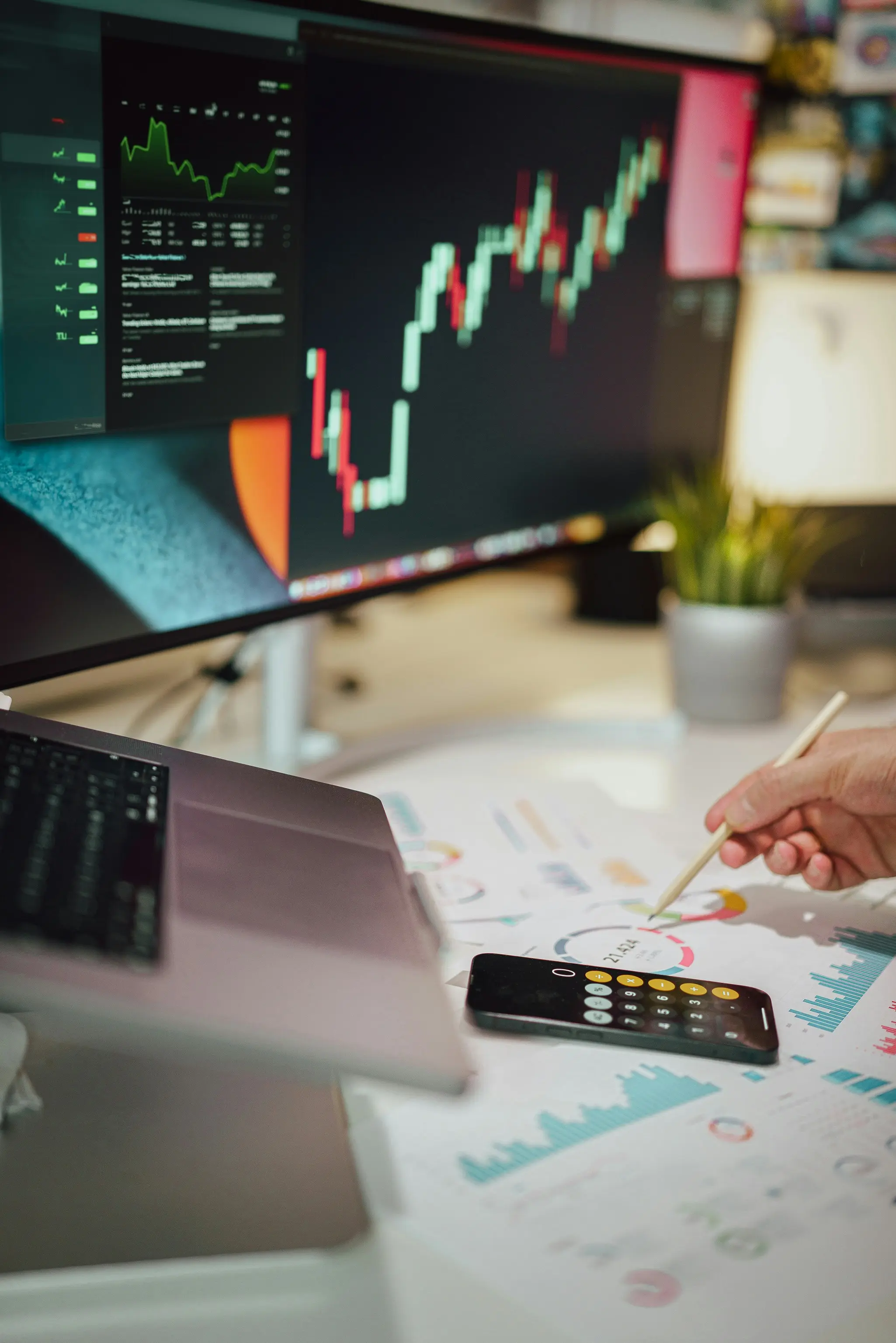
Most traders obsess over what happens before they click buy or sell. They spend hours on setups, indicators, and entry signals. But the time after your last trade closes? That's where the real edge is built — and where most traders drop the ball.
An end-of-day (EOD) trading routine is the bridge between raw market experience and actual improvement. Without it, you're repeating the same mistakes week after week and wondering why nothing changes.
Here's a practical, 5-step EOD routine you can start tonight — and why it matters more than your morning setup.
Why Most Traders Skip the EOD Routine
It's not laziness (usually). It's psychology.
After a winning session, you don't want to jinx it by over-analysing. After a losing one, the last thing you want to do is relive it. So you close your charts, open Netflix, and tell yourself you'll review everything "this weekend."
That weekend never comes.
The traders who consistently improve aren't necessarily smarter. They're the ones who sit down for 15 minutes at the end of every session and force themselves to reflect. That's the discipline gap — and it compounds fast.
Step 1: Close Every Open Position and Document It
Before anything else, deal with what's still live.
If you have positions open at the end of your session, document why you're holding them overnight (or over the weekend). Write down:
- Original entry reason — what triggered the trade
- Current price vs. your plan — are you still in line with your thesis?
- Updated stop loss and target — adjusted or unchanged?
If you can't clearly articulate why you're still in a trade, that's a red flag. Unclear holding reasons = emotional attachment to the position.
This step alone will save you from waking up to surprises and making panicked decisions pre-market.
Step 2: Log Every Trade With Key Details
Now log each trade you took during the session. Not just the basics — the details that matter for learning.
For each trade, capture:
- Instrument and direction (long/short)
- Entry and exit prices with timestamps
- Setup type (what pattern or signal triggered it)
- Position size and risk amount in dollars
- Outcome (P&L in dollars and R-multiples)
- Screenshots of the chart at entry (if possible)
The key rule: Log within an hour of your session ending. Memory fades fast. A trade you "knew exactly why you took" at 4 PM becomes a foggy guess by 8 PM.
This is where a trading journal becomes essential. Writing it in a notebook works, but a digital journal makes it searchable and trackable over time — you can actually spot patterns across weeks and months, not just pages.
Step 3: Grade Your Execution (Not Just the Outcome)
This is the step that separates growth-minded traders from the rest.
Grade each trade on execution, not result. Use a simple A–F scale:
- A — Followed your plan perfectly. Entry, stop, target all matched.
- B — Followed plan with minor deviations (early exit, slight size adjustment).
- C — Partially followed plan. Mixed signals, some rule breaks.
- D — Barely followed plan. Chased, overrode stops, or sized wrong.
- F — No plan. Pure impulse or emotion.
A losing trade graded A is more valuable than a winning trade graded D. Why? Because A-grade losses mean your process is working — it just needs time. D-grade wins are luck disguised as skill, and they'll eventually catch up with you.
Track your average execution grade weekly. If it's dropping, something in your process or mindset is off — long before your account starts bleeding.
Step 4: Identify One Specific Lesson
Don't try to fix everything at once. After logging and grading, ask yourself:
"If I could only change one thing from today, what would it be?"
Write that lesson down. Examples:
- "I exited my winning trade 20 pips early because I got nervous holding it."
- "I took a setup outside my trading hours because FOMO hit."
- "My position size was inconsistent — I went bigger on the 'sure thing.'"
- "I didn't wait for my entry confirmation and got a worse fill."
One lesson per session. One improvement to focus on tomorrow.
Over a month, that's 20 focused micro-adjustments. Over a year, it's the difference between a struggling trader and a consistent one.
Step 5: Set Tomorrow's Plan Before You Close Your Laptop
The final step is about removing tomorrow's friction.
Before closing everything, write down:
- Which sessions you'll trade (London open? New York? Both?)
- Key levels you're watching on your primary instruments
- Any economic events (NFP, FOMC, earnings) that might affect your plan
- Your max daily loss limit — and stick to it no matter what
This takes 3 minutes and eliminates the "What am I doing today?" paralysis that leads to random, undisciplined trading.
Why This Routine Works
The EOD routine isn't about punishment or self-criticism. It's about data collection and pattern recognition — the two things your brain is terrible at doing from memory alone.
Think about it: if you traded 500 times last year, could you accurately recall which setups worked best on Tuesdays? Which hours had your best win rate? When you tended to overtrade?
A journal captures what your brain can't. And the EOD routine is how you keep that journal honest and complete.
The traders who survive and thrive in this game aren't the ones with the best indicators or the fastest feeds. They're the ones who know themselves better than the market — and they build that self-knowledge one end-of-day session at a time.
Start Tonight
You don't need a perfect system. You need a consistent one.
Open a document, pull up today's charts, and spend 15 minutes going through these five steps. Do it again tomorrow. Within two weeks, you'll start seeing patterns in your own trading that were invisible before.
And if you want to make it effortless, start your free trading journal with LogYourTrade. Logging trades, tracking grades, and spotting patterns is exactly what it's built for — so you can focus on trading, not spreadsheets.
Your trades tell a story. The EOD routine is how you read it.
Ready to start journaling?
Track your trades, analyze performance, and build discipline with LogYourTrade.
Start Free