Understanding Drawdowns in Trading: What They Are and How to Manage Them
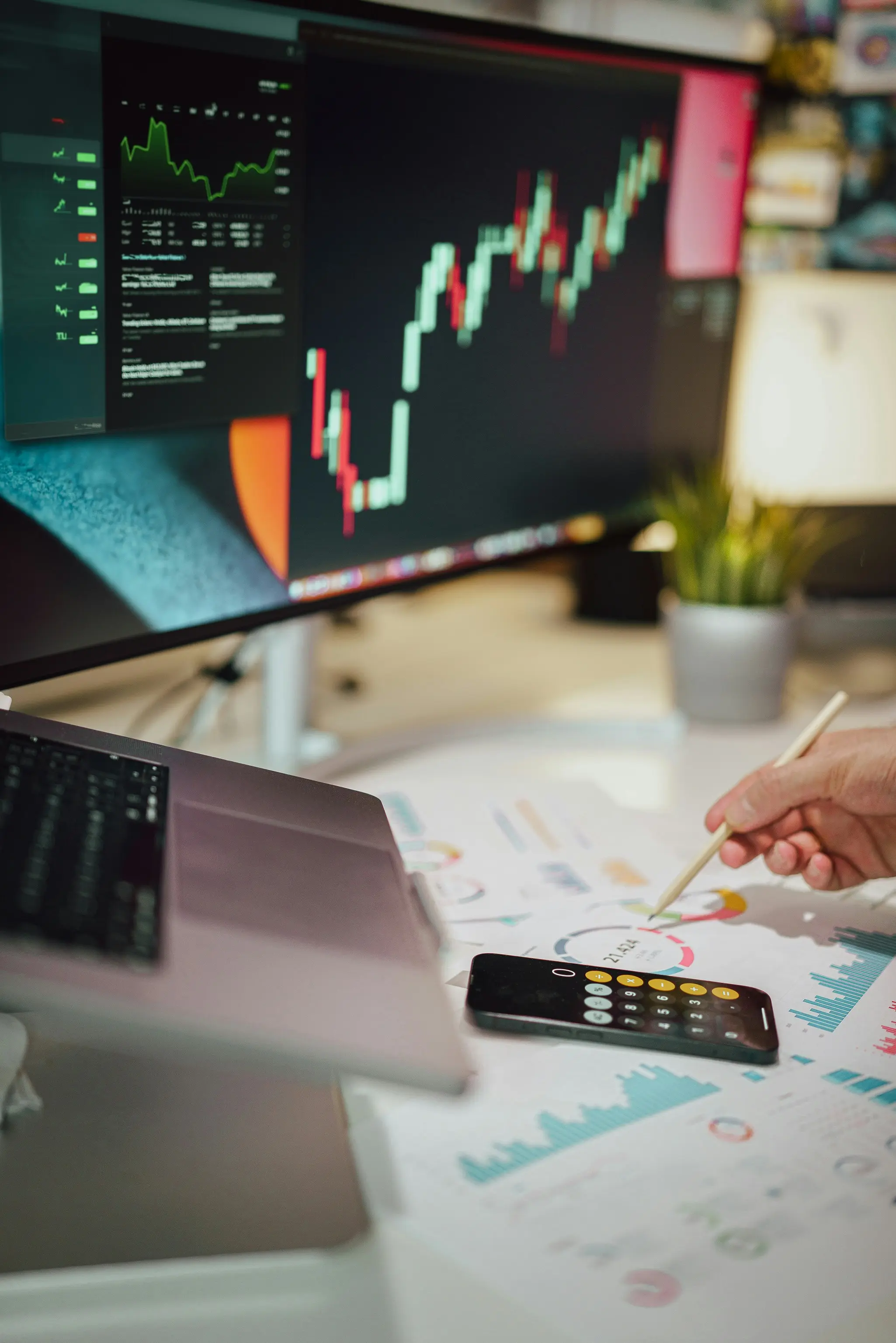
Every trader experiences them. You're riding a winning streak, confidence is high, and then the market turns. Your equity curve starts sliding. Days turn into weeks of red. That sinking feeling in your stomach? That's a drawdown — and how you handle it defines your career as a trader.
Most traders panic during drawdowns. They over-leverage to "make it back," abandon their strategy, or go on tilt. The traders who survive and thrive are the ones who understand what drawdowns really are, expect them as part of the process, and have a plan to manage them.
Here's everything you need to know about drawdowns — and how to keep them from blowing up your account.
What Is a Drawdown?
A drawdown is the decline in your trading account from its peak value to its lowest point before a new high is reached. It's usually expressed as a percentage.
For example:
- Your account hits $10,000 (peak)
- After a series of losses, it drops to $8,500
- That's a 15% drawdown
It doesn't matter if the loss happened over one trade or twenty — a drawdown measures the total peak-to-trough decline.
There are two types traders track:
- Current drawdown: How far your account is right now below its most recent peak
- Maximum drawdown (Max DD): The largest peak-to-trough decline your account has ever experienced
Maximum drawdown is especially important because it tells you the worst-case scenario your strategy has produced historically. It's the number that keeps you honest.
Why Drawdowns Matter More Than Win Rate
Most newer traders obsess over win rate. "What percentage of my trades are winners?" It feels like the right question. It's not.
A trader with a 60% win rate can still blow up their account. A trader with a 40% win rate can compound steadily for years. The difference? How they manage their drawdowns.
Consider two traders:
| Metric | Trader A | Trader B | |--------|----------|----------| | Win rate | 55% | 40% | | Average win | $200 | $600 | | Average loss | $150 | $200 | | Risk per trade | 5% | 1% | | Max drawdown | 45% | 12% |
Trader A wins more often but risks too much per trade. A bad streak wipes out nearly half their account. Trader B wins less frequently but manages risk tightly — their drawdowns are shallow and recoverable.
Drawdowns are the real measure of your risk. Not win rate. Not total return. How much you can lose — and how quickly — determines whether you survive long enough for your edge to play out.
The Math of Recovery: Why Deep Drawdowns Are Dangerous
Here's the part most traders don't think about until it's too late: losses compound asymmetrically.
- A 10% drawdown requires an 11.1% gain to recover
- A 25% drawdown requires a 33.3% gain to recover
- A 50% drawdown requires a 100% gain to recover
- A 75% drawdown requires a 300% gain to recover
See the pattern? The deeper the hole, the exponentially harder it is to climb out. A 50% drawdown doesn't just set you back — it demands you double your money just to break even. Most traders who hit a 50% drawdown never recover, not because their strategy is broken, but because the psychological and mathematical burden is too heavy.
This is why professional traders typically cap their risk to keep maximum drawdowns under 20-25%. Below that threshold, recovery is mathematically reasonable. Above it, you're gambling.
5 Strategies to Manage Drawdowns Effectively
1. Define Your Maximum Drawdown Tolerance Before You Trade
Before placing a single trade, decide your maximum acceptable drawdown. This isn't a suggestion — it's a hard line.
For most retail traders, a 20% max drawdown is a reasonable starting point. More conservative traders might set it at 15%. Aggressive traders might push to 25%. The exact number matters less than having one.
Write it down. Put it in your trading plan. When your account hits that level, you stop trading live and switch to demo until you've identified and fixed the problem.
Key principle: Your max drawdown limit is non-negotiable. Treat it like a circuit breaker, not a suggestion.
2. Reduce Position Size During Losing Streaks
One of the most effective ways to manage drawdowns is to scale down when you're losing. This sounds counterintuitive — shouldn't you size up to make back losses faster?
No. That's revenge trading dressed up as strategy.
When you're in a drawdown, reduce your risk per trade by 25-50%. This does three things:
- Slows the bleeding — smaller positions mean smaller losses per trade
- Reduces emotional pressure — each individual loss hurts less, keeping you rational
- Preserves capital for recovery — you maintain enough runway for when your edge returns
You can scale back up once your equity curve starts making new highs again.
3. Track Your Drawdowns in Your Trading Journal
You can't manage what you don't measure. Your trading journal should track drawdown metrics as closely as it tracks individual trades.
Key metrics to log:
- Current drawdown percentage (updated after each trading day)
- Maximum drawdown (running all-time high)
- Drawdown duration — how long since your last equity high
- Consecutive losses — your current and historical losing streak
- Drawdown trigger — what caused it (strategy failure, market regime change, emotional trading)
Logging these metrics creates a feedback loop. Over time, you'll start to see patterns — like drawdowns clustering around certain market conditions or specific setup types. That data is gold for improving your strategy.
4. Diversify Across Strategies and Timeframes
All strategies go through drawdowns. But they rarely all draw down at the same time.
If you're only trading one strategy on one timeframe, you're fully exposed to its drawdown cycles. Adding a second uncorrelated strategy — even a simple one — can significantly smooth your equity curve.
Examples of diversification:
- Trade both breakout and mean-reversion strategies
- Combine day trading with swing trading positions
- Trade across multiple currency pairs or stocks instead of one
The goal isn't to have ten strategies. Even two uncorrelated approaches can cut your maximum drawdown meaningfully.
5. Have a Drawdown Recovery Plan
When you're in a drawdown, your thinking is compromised. That's not weakness — it's neuroscience. Loss aversion makes every trade feel loaded. This is why you need a drawdown recovery plan written when you're thinking clearly.
Your plan should include:
- The trigger: What drawdown level activates the plan (e.g., 10%)
- The action: What you do immediately (e.g., reduce position size by 50%)
- The review: What you analyze (journal review, strategy audit, market conditions)
- The timeline: How long before you return to full size (e.g., 5 consecutive winning days on reduced size)
- The circuit breaker: At what point you stop trading entirely (e.g., 20% drawdown)
Having this plan removes decision-making from the equation when you're most vulnerable. You don't think — you execute.
What to Do When You're Already Deep in a Drawdown
If you're reading this and you're already in a significant drawdown, here's your action plan:
Step 1: Stop trading live immediately. You're emotionally compromised, and every trade you take right now is likely driven by the urge to recover rather than a clear edge.
Step 2: Audit your recent trades. Pull up your journal and look at the last 20-30 trades. Are you following your plan? Are losses from normal variance or from breaking your own rules?
Step 3: Check market conditions. Is the market in a regime that your strategy doesn't handle well? Range-bound markets kill trend-followers. Trending markets kill range traders. Sometimes the drawdown isn't your fault — it's just the wrong market.
Step 4: Fix one thing at a time. Don't overhaul your entire strategy. Identify the single biggest contributor to your drawdown and address it.
Step 5: Return on demo first. Prove to yourself that you can execute your plan with discipline before risking real capital again.
The Bottom Line
Drawdowns aren't a sign of failure — they're a natural part of trading. Every strategy, every trader, every fund experiences them. The difference between traders who survive and those who don't comes down to one thing: how they respond when the drawdown hits.
Define your limits. Track your metrics. Reduce risk when you're losing. Have a plan written before you need it.
If you're not already tracking your drawdowns, start today. A good trading journal like LogYourTrade makes it easy to monitor your equity curve, spot drawdown patterns, and make data-driven adjustments before small losses become big ones.
The best time to build your drawdown management system was before your first trade. The second best time is now.
Ready to start journaling?
Track your trades, analyze performance, and build discipline with LogYourTrade.
Start Free